 IncomeWiki
CategoriesMarketing
Case Studies/Product Hunt's Pre-launch Community Strategy
Created by @namkyu · Updated Nov 26, 2026
Linked Pages
No published pages are linked from this document.
Backlinks
No published pages link to this document yet.
Created by @namkyu · Updated Nov 26, 2026
No published pages are linked from this document.
No published pages link to this document yet.
Many founders spend months building a product before thinking about how to acquire users.
Product Hunt took a different approach. Ryan Hoover started building a community before developing the website itself.
What eventually became a popular platform for discovering new products began as a simple email experiment in November 2013.
Pre-launch community building involves bringing potential users together before a product becomes publicly available.
Unlike a conventional waitlist, an early community can provide immediate value through content, discussions, shared experiences, and participation.
This allows founders to develop relationships with potential users while learning more about their needs.
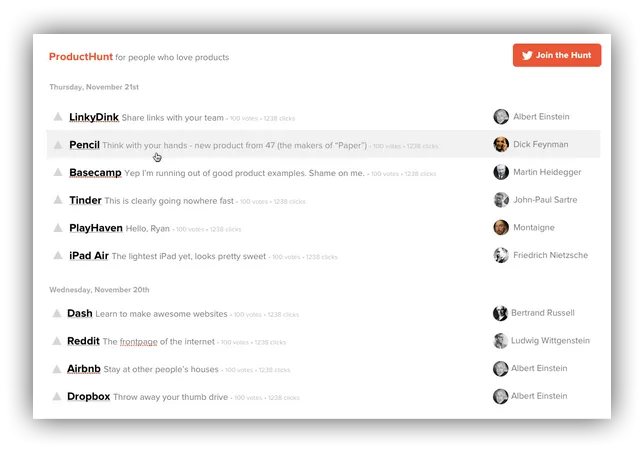
Instead of developing a website, Hoover used Linkydink, an existing link-sharing service, to create a collaborative email digest.
Selected contributors submitted interesting products, and subscribers received a daily collection of recommendations.
Hoover invited people from his startup network and announced the experiment through his blog, Twitter, and Quibb.
Within two weeks, the digest attracted more than 170 subscribers and 30 selected contributors.
After receiving encouraging feedback, Hoover worked with Nathan Bashaw to develop a dedicated website.
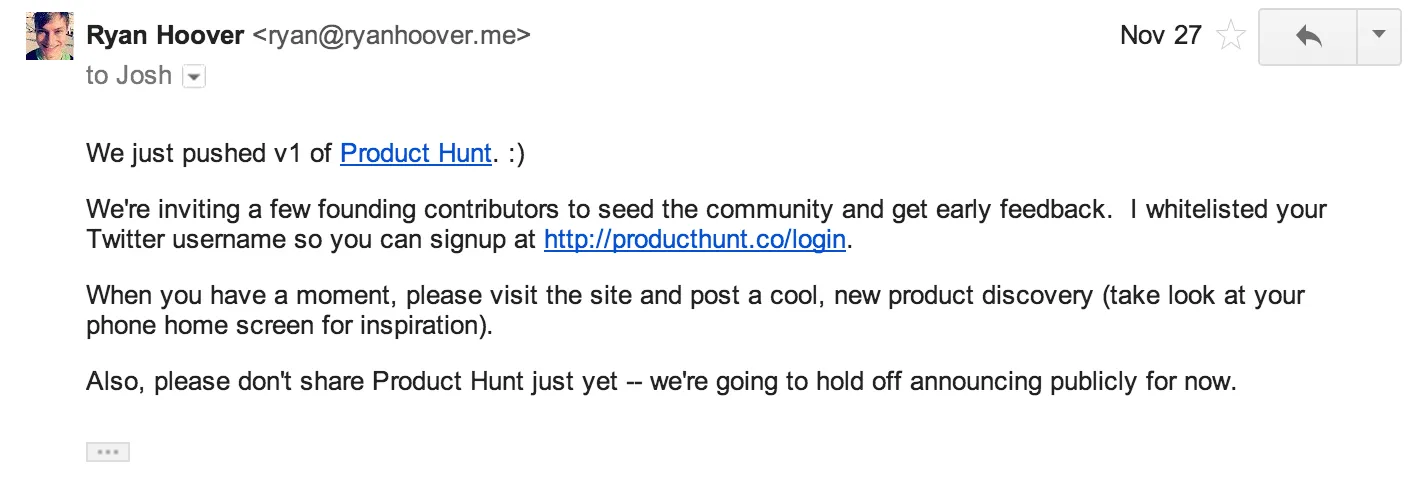
They involved existing contributors in reviewing early designs and invited selected supporters to test the first version privately.
The invitation encouraged recipients to contribute product discoveries while keeping the website private until it was ready for a wider audience.
The private beta attracted 30 users on its first day and reached 100 by the end of the first week.
Product Hunt coordinated its public launch with coverage from the technology publication PandoDaily.
Existing members were encouraged to submit products and share the announcement.
This helped ensure that new visitors discovered an active community rather than an empty website.
Product Hunt reached 400 users by the end of its public launch day.
The founders continued identifying promising contributors, contacting them personally, and asking existing members for introductions.
They prioritized people who could contribute to the community rather than focusing exclusively on signup numbers.
Milestone | Reported Result |
|---|---|
Time to Create the Email MVP | 20 minutes |
Email Subscribers After Two Weeks | 170+ |
Initial Email Contributors | 30 |
First Day of Private Website Beta | 30 users |
First Week of Website Beta | 100 users |
Public Website Launch Day | 400 users |
Early Website Growth Milestone | 2,000 users |
Source: Ryan Hoover's published accounts from December 2013 and January 2014.
These figures distinguish email subscribers from website users. The exact acquisition costs and conversion rates were not disclosed.
Providing value before launch
People could discover useful products through the email digest without waiting for a complete website.
Reducing the empty platform problem
An existing group of contributors helped populate the website with content and activity.
Building relationships early
Involving potential users in product development can create a sense of participation and provide valuable feedback.
However, Hoover had already developed relationships and an audience through previous writing and projects. This existing network was an important starting advantage.
Identify an audience with a shared interest or problem.
Provide something useful before building the complete product.
Personally recruit a small group of potential users.
Encourage participation through newsletters, discussions, or shared resources.
Invite active participants to test the product.
Use their feedback to improve the experience before launching publicly.
Possible starting formats include newsletters, shared spreadsheets, Discord communities, curated resource collections, and private discussion groups.
Useful metrics include subscriber growth, active contributors, repeat engagement, and the percentage of community members who become product users.
Advantages | Limitations |
|---|---|
Validates demand before development | Requires ongoing community management |
Provides access to early feedback | Building trust takes time |
Creates an audience before launch | Community members may not become product users |
Helps establish initial platform activity | Existing relationships can influence results |
Product Hunt demonstrates how a community can become a source of early users before the complete product exists.
Rather than treating user acquisition as something that begins after development, founders can begin providing value, building relationships, and validating demand much earlier.
Announcing Product Hunt — Ryan Hoover, November 2013
Product Hunt Began as an Email List — Ryan Hoover, December 2013
How We Got Our First 2,000 Users Doing Things That Don't Scale — Ryan Hoover, Fast Company, January 2014
Making Product Hunt — Ryan Hoover, October 2014
Early Product Hunt website — Making Product Hunt
Private beta invitation email — Fast Company