 IncomeWiki
Case Studies/Loom's Product Hunt Launch Strategy
Created by @namkyu · Updated Nov 26, 2026
Linked Pages
No published pages are linked from this document.
Backlinks
No published pages link to this document yet.
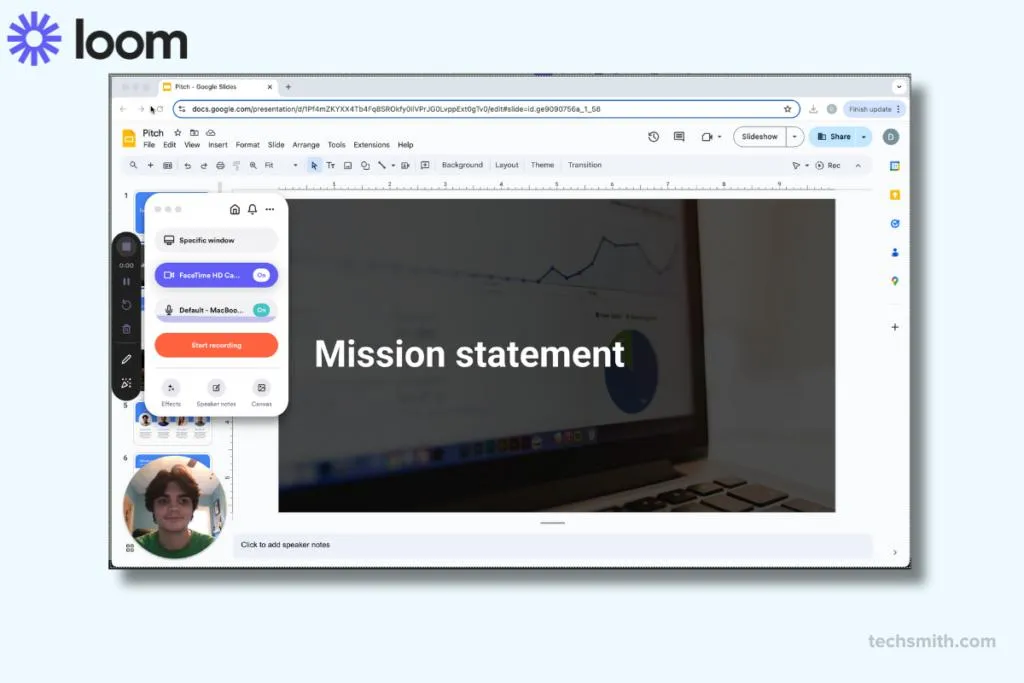
Getting users is particularly difficult when a startup has not yet discovered which part of its product people actually need.
Before becoming Loom, the video communication platform began as a user testing business founded by Joe Thomas, Vinay Hiremath, and Shahed Khan.
After struggling to attract users, the founders discovered a new opportunity within an existing feature and launched it as a standalone product on Product Hunt.
Product Hunt is a platform where makers introduce new products to a community of technology enthusiasts, entrepreneurs, and early adopters.
A Product Hunt launch can help startups attract initial users, collect feedback, and test market demand.
However, publishing a product listing alone does not guarantee meaningful results.
Loom's original business was a user testing marketplace. According to co-founder Shahed Khan, the business generated only $600 during its first seven months.
The founders subsequently developed OpenTest, a tool that allowed businesses to collect video feedback from their own users.
During a project involving a Harvard research team, someone used the recording extension to create a short video summarizing research findings for colleagues.
This unexpected use case revealed an opportunity beyond user testing: workplace communication through video.
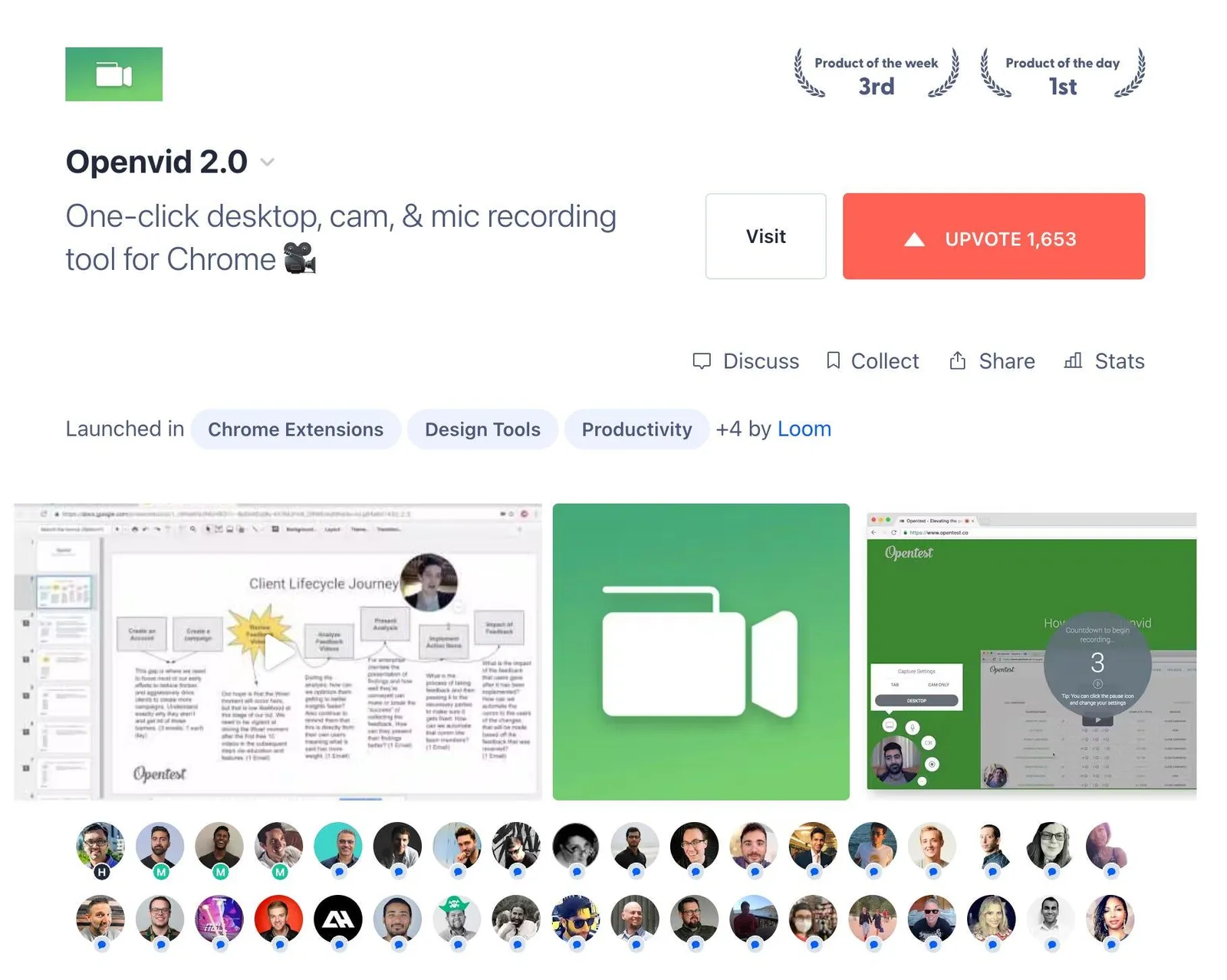
The founders separated the recording feature from OpenTest and introduced it as a standalone Chrome extension called Openvid.
Before releasing Openvid publicly, the founders approached people in coffee shops and observed them using the extension.
These tests revealed usability problems. Some testers could not tell whether recording had started or how to stop it.
The team improved the onboarding experience before launching.
Openvid launched on Product Hunt on June 17, 2016.
The product offered a straightforward experience: record a screen or camera video and immediately receive a shareable link.
The founders concentrated their launch activities on Product Hunt, where potential users could discover the product, ask questions, and provide feedback.
The founders actively responded to comments and sometimes used their own recording tool to send personalized video responses.
They also communicated with users through Twitter, email, and Intercom.
Feature requests were collected and organized into a public feedback board.
The initial launch generated significant attention, but the founders needed to understand why people continued using the product.
They monitored user behavior, interviewed customers, and investigated where users stopped engaging.
They eventually identified receiving a first video view as an important activation milestone.
Video sharing also created opportunities for new users to discover the product organically.
Metric | Reported Result |
|---|---|
Revenue From Original Business After Seven Months | $600 |
Companies Contacted Before the Pivot | Approximately 300 |
Openvid Launch | June 17, 2016 |
Signups Within 24 Hours | Approximately 3,000 |
Users Within Three Months | 10,000+ |
Product Hunt Upvotes Reported in September 2016 | Approximately 1,700 |
Product Hunt Monthly Ranking | #4, June 2016 |
Rebranded as Loom | January 2017 |
These figures are based on founder accounts and Product Hunt records.
The exact launch expenditure and acquisition cost per user were not disclosed. Growth after the initial launch also involved product improvements, organic sharing, and continued customer engagement.
A focused product
Openvid offered a clear solution without requiring users to adopt a larger platform.
Relevant distribution
Product Hunt gave the founders access to people interested in discovering and testing new software.
Immediate product value
Users could create and share a video without complicated file management.
Organic discovery
Shared videos introduced the product to additional potential users.
Identify a specific problem your product solves.
Test the core experience with real potential users.
Prepare screenshots, demonstrations, and a clear product description.
Launch on a platform where your target audience is active.
Respond to questions and feedback during the launch.
Measure signups, activation, and returning users.
Improve the product based on observed behavior.
The objective should be to acquire users who genuinely benefit from the product, rather than simply achieving a high launch ranking.
Advantages | Limitations |
|---|---|
Access to early adopters | Competitive launch environment |
Immediate product feedback | Traffic may decline quickly |
Potential for significant initial exposure | Requires preparation and customer support |
Opportunity to validate positioning | Signups do not guarantee retention |
Loom's experience demonstrates that a product launch can serve as both a distribution strategy and a market validation experiment.
Its early growth followed several unsuccessful attempts, a narrower product offering, and a willingness to learn from customers.
The launch created an opportunity. Continued product improvements and user engagement helped turn that opportunity into sustained growth.
0–10,000 users: How Openvid launched on Product Hunt — Vinay Hiremath, September 2016
How 9 months of building without success, 2 pivots, and 100s of rejections resulted in Loom — Shahed Khan
How Loom's bet on Product Hunt paid off — Product Hunt, August 2022
How Loom grew its user base after its Product Hunt launch — Product Hunt, March 2021
Introducing Loom — Joe Thomas, January 2017
Best of Product Hunt: June 2016 — Product Hunt
Early Chrome extension — Google Cloud: The Web at Work
User signup growth chart — Vinay Hiremath's 2016 launch retrospective